

Kitchen makers
Compression nest bits from CuTool keep melamine chips down and keep your kitchen panels sharp right through a busy cutting week.
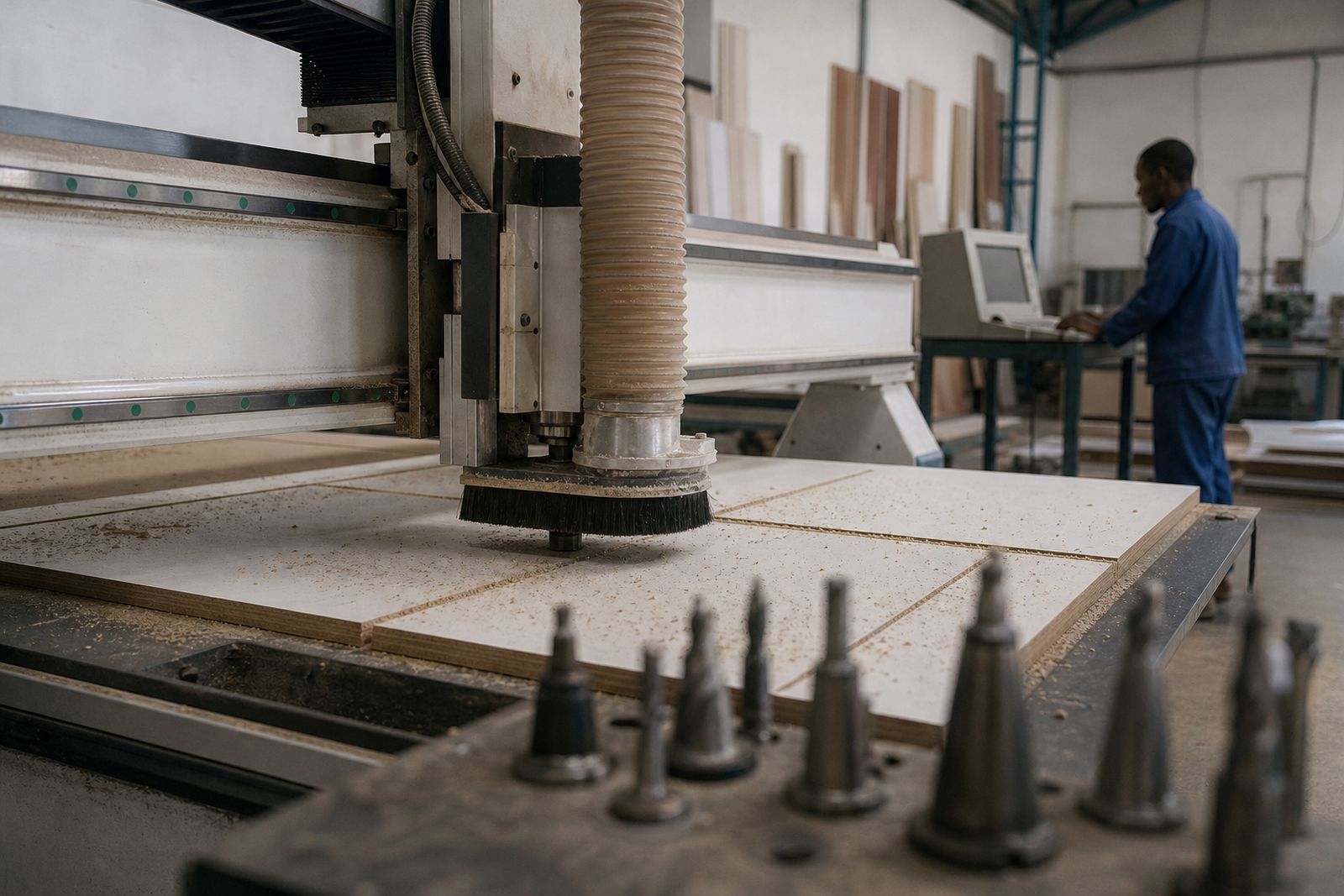
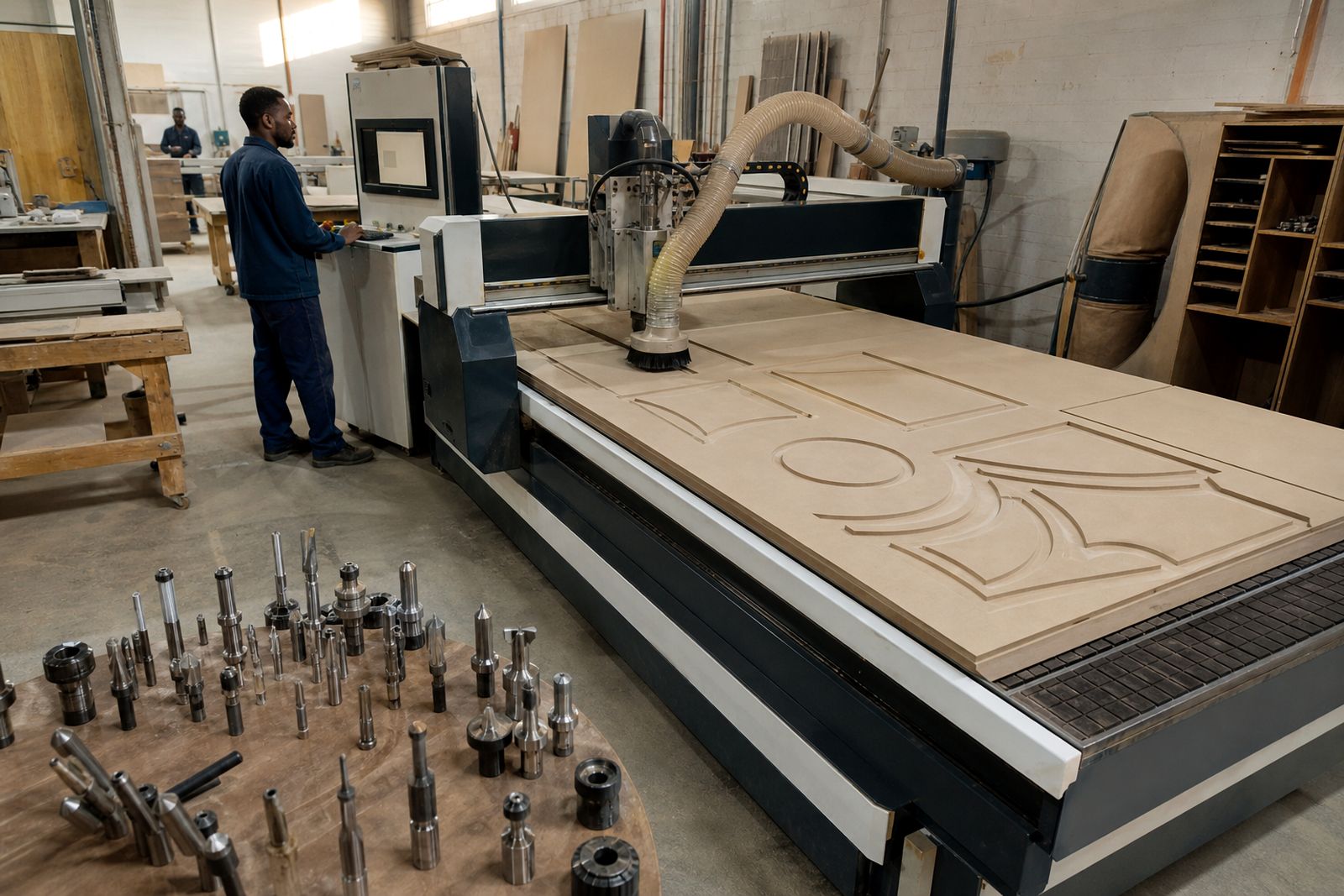
Kitchen makers cut melamine, chipboard and MDF for panels and doors
CuTool’s compression nest bit gives clean top and bottom faces on melamine while the router bit starter covers edge work and hinge holes. Tool life cards help you track performance and manage regrinds.
See also edge notes and printable cards.
Most kitchen workshops spend the week breaking down melamine-faced chipboard, MDF and some plywood into panel parts for cabinets, doors, shelves and carcasses. That means lots of nested sheets, usually white or woodgrain, with edges that must stay sharp for sealing and assembly. Melamine chips easily, and a poor cut wastes both board and banding. Certain jobs need special care, like handleless doors or panels for bathroom vanities where humidity is an issue. Now and then a kitchen shop will run solid timber for feature doors or a high-pressure laminate, but the core routine is always the same: accurate, splinter-free cuts, fast turnarounds.
Most tooling trouble comes from chip-out, blunt edges or heat build-up
Chipping on the top or bottom face is the top complaint, especially with older or blunt bits. A wrong spindle direction, loose collet, too much stick-out or a dulled edge can leave you with a splintered edge or a burned panel. Going too slow with feed rate, or using a downcut instead of a compression, can make the glue line go brown, or, worse, pull the laminate off. On a Monday morning, someone might forget to blow out the collet and clamp a bit with dust, which increases runout and shortens tool life. Too much heat on repeated passes dries out MDF edges, making them drink glue later. Forgetting to check for resin build-up or not tightening the nut to the right torque also creep in during a long week.
CuTool’s compression nest bit, router bit starter and tool life cards help you run clean for every job
Start your sheet run with the compression nest bit: its up/down spiral keeps both faces of melamine clean. Standard sizes cover 3 to 12 mm up to 16 mm, with a 6 mm or 8 mm shank to match most nesting machines. Run at 18 000 to 22 000 rpm with a feed of 8 to 18 metres per minute as your starting point, at 60 to 70 percent stepover and max 1.5 x diameter stepdown per pass. Use the router bit starter for edge profiling, slotting or hinge holes, with a single flute or small upcut for chip clearance in tight pockets. Always check and seat the ER collet, running out the spindle with a dial indicator to spot any excess wobble. The tool life cards from CuTool let you record cut metres, resharpen cycles and which bit is due for regrind or retirement, a quick check each time you change a board or tool.
- Compression nest bit (main panel cuts)
- Router bit starter (details, slots, hinges)
- Tool Life Cards (tracking and planning)
Plan ahead for busy weeks, regrinds and stock-outs in the cutting room
Always have two sharp compression bits per main spindle, one in use, one waiting, so you’re covered when a run goes longer than planned or a panel with metallic foil needs a fresh edge. Deadlines often bunch up before school holidays, festive season installs or end-of-month handovers, so order bits and collets by midweek before the rush. Use the tool life card to flag bits due for regrind and arrange a courier run to Sunnyrock or a local partner before you’re down to the last cutter. Keep a set of collets and nuts handy, as forgetting to change a sticky nut can cost you a day. During power cuts or after a fault, re-home the CNC and check zero on your next board, nothing ruins a half-cut kitchen like starting 2 mm off. Use our contact form if your stock or scheduled regrinds look tight before a public holiday.
What our Cutting Tool customers say
Verified Google reviews
Also worth a look
Tell us about the job you need to cut
Send a note through our contact form with your machine, spindle and collet size, the material and thickness, the finish you need and your area, and we will come back with practical cutter options and a quote.
Open the contact form