

Router bit starter fixtures
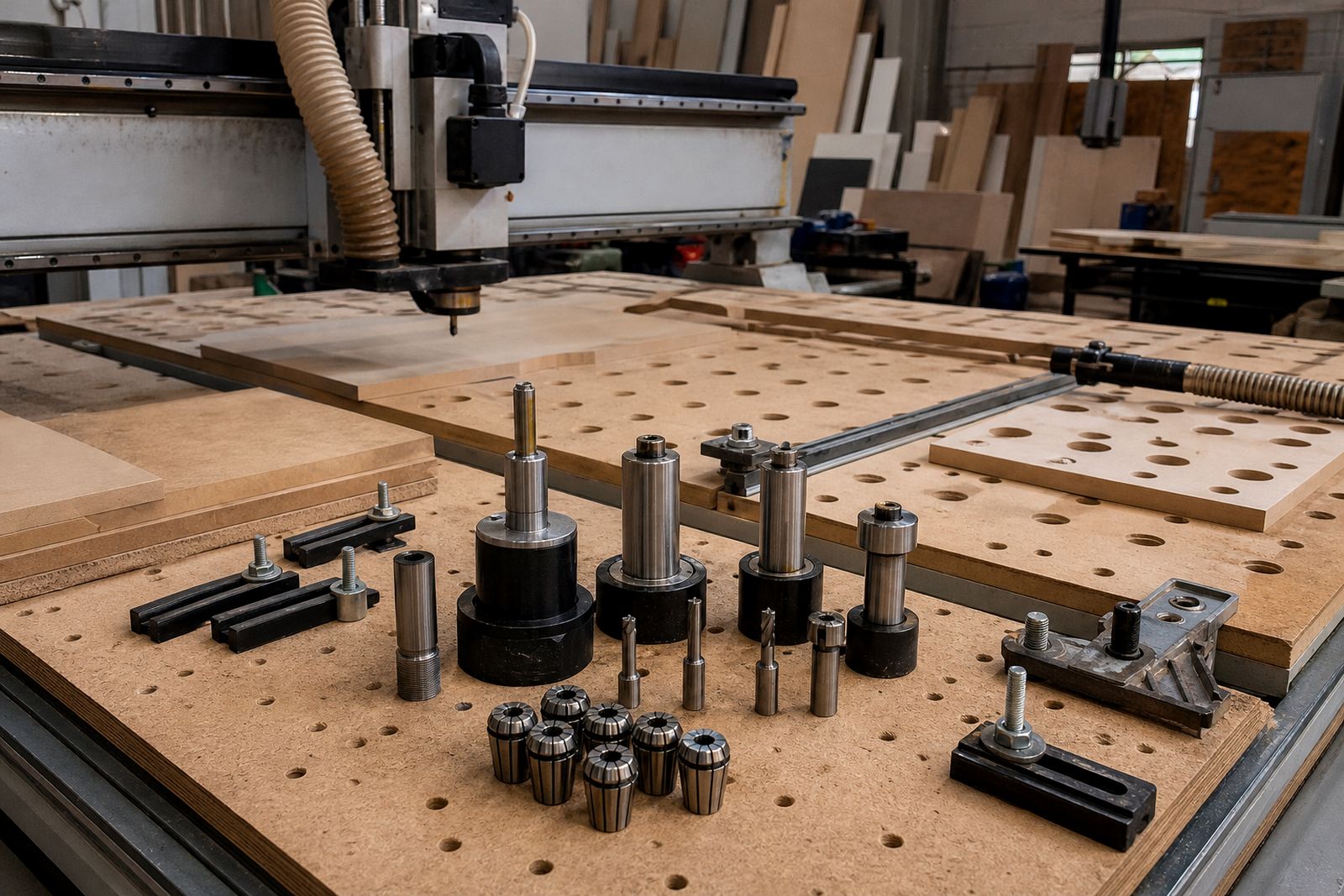
Pairs with typical ER collets, spoilboards, and both vacuum and clamp setups.
Pairs well with
- ER11/ER20 collets
- Spoilboard or MDF sac board
- Vacuum or clamp workholding
Collets and nuts for router bit starter fixtures (6 and 8 mm) come from the Holder Collet Kit, and our material guides cover the sheets and boards this line suits.
Workholding and spoilboards for best results
These router bit starter fixtures work best with a flat spoilboard and strong hold-down. MDF sacrificial boards are popular for quick setup. Vacuum tables help for repeatable jobs, but clamps or cam clamps work well for smaller parts or schools with portable routers. For letters or fretwork, onion-skin passes are useful: leave a thin layer at the bottom, then finish with a final pass to avoid small pieces coming loose. Tabs can be programmed in your CAM to keep parts from shifting, especially when training students or running many small pieces at once.
- Use a level MDF spoilboard
- Vacuum or cam clamps for hold-down
- Onion-skin passes for fine work
Other CuTool tools for the job
In a typical routine, the router bit starter handles profiling, pockets and lettering. Start with a softwood upcut pack for roughing pine if needed, then switch to these for finer work in MDF or ply. For slots and deeper mortices, the carbide slot set goes deeper and holds up in thicker boards. For sharp chamfers or bevelling, finish with a chamfer edge kit. If you work with acrylics or want tidy edges in Perspex, swap in the acrylic chip breaker. Store life and usage with our printable tool life cards to track performance and regrinds.
Common fixture slip-ups in South African shops
We often see bits run with loose collets or over-tightened nuts, which causes runout and early breakage. Highveld dust can clog collet slots, so clean them weekly. In coastal shops, MDF spoilboards can warp from damp, so check flatness before each job. Never clamp the workpiece only at the edges, in schools especially, add a clamp or hold-down close to the cutting line. Avoid letting the bit stick out too far, and always check for chips or resin on the bit before starting the spindle.
- Tighten collet nuts to correct torque
- Keep spoilboard flat in coastal humidity
- Clean collets and holders regularly
What our Cutting Tool customers say
Verified Google reviews
Tell us about the job you need to cut
Send a note through our contact form with your machine, spindle and collet size, the material and thickness, the finish you need and your area, and we will come back with practical cutter options and a quote.
Open the contact form