

Tool life cards fixtures
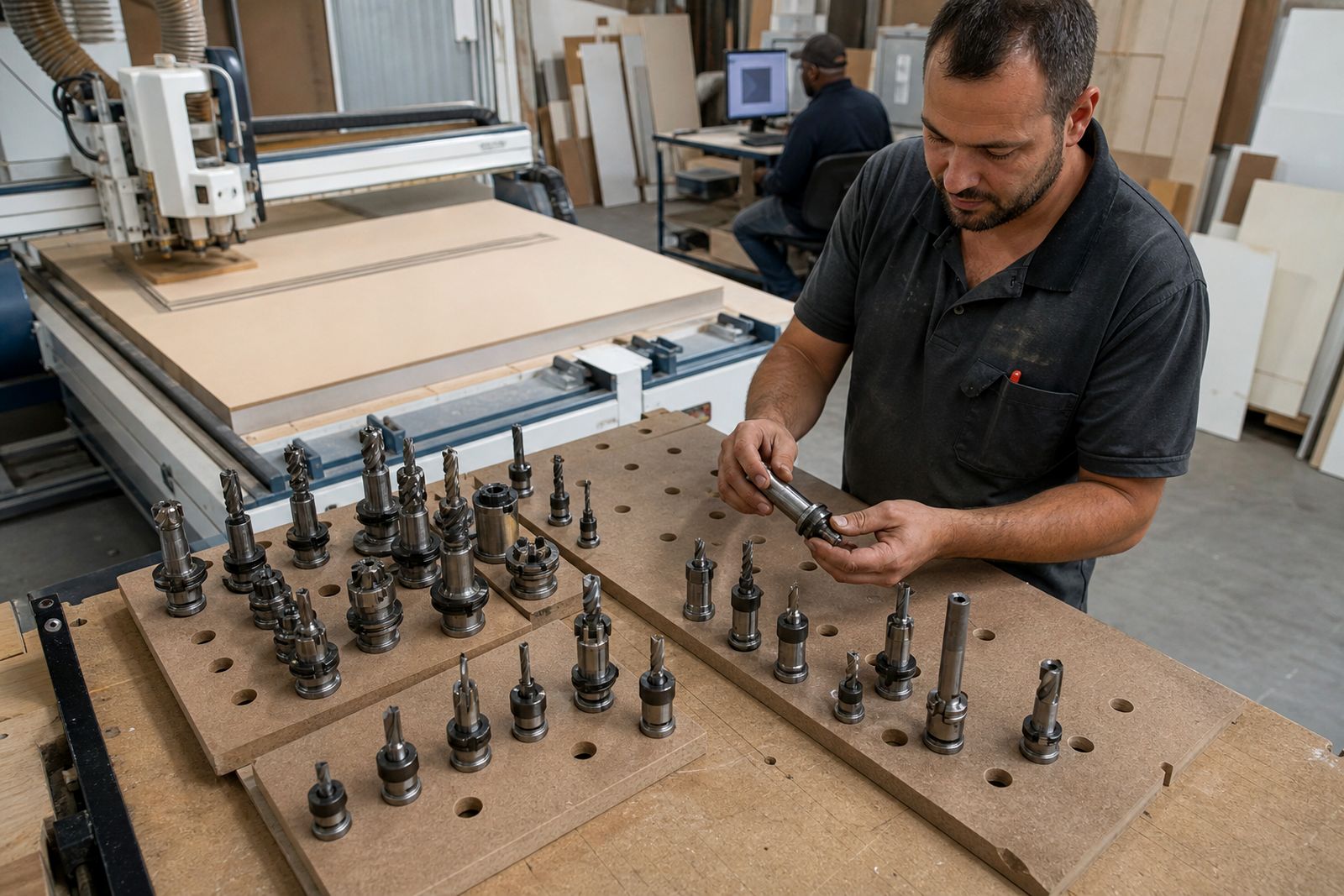
Tool Life Cards suit any CNC bench or wall.
Tools that pair well
- ER collets
- Spoilboard setup
- Chamfer edge kit
Collets and nuts for Tool Life Cards (metric shanks) come from the Holder Collet Kit, and our material guides cover the sheets and boards this line suits.
Pairing cards with collets and holders
A tool life card only works if the setup is consistent. Use ER collets in good condition, checked for dust or wear every shift. Magnetic or Velcro card holders keep the card visible at the spindle or workbench. For spoilboards, regular surfacing keeps the reference true, so your depth-of-cut logs on the card match reality.
Vacuum hold-down is best for repeatable jobs, but clamps, double-sided tape or a well-surfaced spoilboard work too. If you use tabs or onion-skin passes, log these cut types on the card, as they can affect edge wear.
- ER collet sets
- Spoilboard surfacing
- Vacuum, clamps, tape
Cutters to track together
Tool Life Cards suit the full CuTool range. Most shops start with the edge pro endmills for timber, then add acrylic chip breaker and aluminium finish mill as jobs expand. Sign spiral kits and compression nest bits benefit most from strict hour tracking, especially with high-volume MDF or chip-prone acrylic.
For a typical shop cycle: begin with the holder collet kit for setup, use the softwood upcut pack or carbide slot set for first cuts, switch to taper ball nose for 3D carving, and end with chamfer edge kit for clean finishing. Each tool gets its own card, so tracking wear and regrind is simple.
- Edge Pro endmills
- Compression nest bit
- Chamfer edge kit
Common mistakes in tool-life tracking
The biggest mistake is not updating the card after each run or shift handover. Another is using the wrong card for the tool: mixing up timber and aluminium logs means you’ll miss early wear patterns. Don’t trust memory: always write down stick-out or collet swaps, especially after a power cut or after cleaning.
Leaving cards exposed to coolant or dust shortens their life. We see too many cards smudged or lost under piles of offcuts. Keep them at shoulder height on the wall, not hidden under the bench.
- Update after every use
- Don’t mix up materials
- Store cards above bench
What our Cutting Tool customers say
Verified Google reviews

Tell us about the job you need to cut
Send a note through our contact form with your machine, spindle and collet size, the material and thickness, the finish you need and your area, and we will come back with practical cutter options and a quote.
Open the contact form