

Holder collet kit service
Clean, check and replace collets when you see chatter, burn marks or mushroomed shanks, don't leave it to chance.
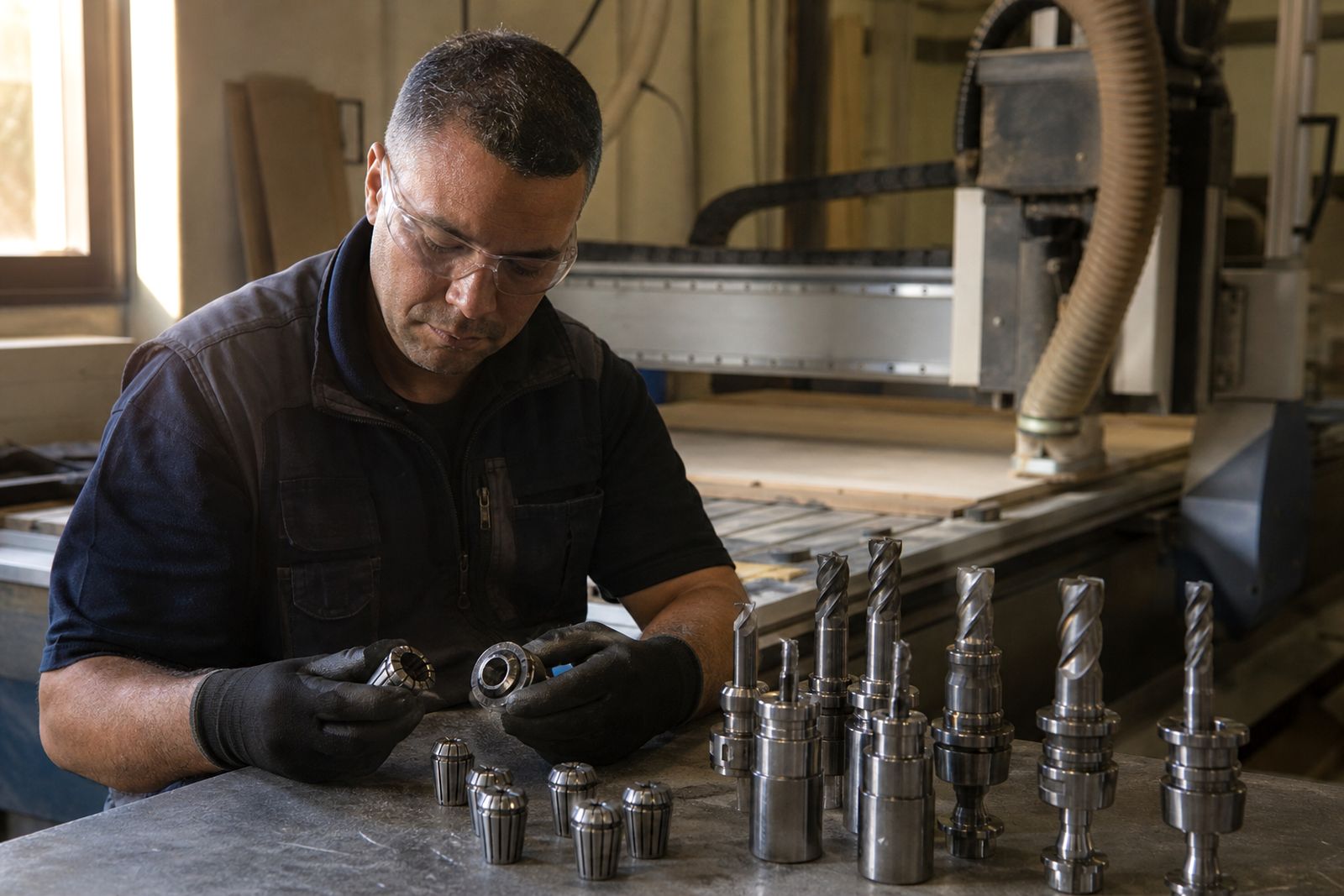
Recognising worn collets and their effect
Log the hours for each cutter on a tool life log. For regrinds, replacements and warranty questions, use our support page.
Worn collets show up as chatter marks, scalloped edges or slightly oval holes on the finished part. You might see burn marks or micro cracks on acrylic, or blunted corners in MDF. If a collet leaves a shiny ring on the tool shank, it's time for a replacement. In aluminium, look for smearing or welded chips near the slot entry, often a sign of bad clamping and heat.
Keeping your collets and nuts clean
Brush out the slots with a stiff nylon brush every shift, and wipe with a little light oil if you're near Durban or Cape Town. Store collets in plastic tubes or a dry rack, away from MDF dust and direct sunlight to prevent corrosion or resin build-up. Never leave a cutter in the collet between jobs, especially in coastal air, condensation can pit the bore by morning.
What to send us for regrind or replacement
If you think your collet or nut needs replacing, use our contact form with a clear photo of the collet face and slots, the typical hours run and the main materials you've cut. If possible, include a shot of the job finish and any marks on the tool shank. Our team will let you know if a regrind is possible or if it's safer to replace, and will advise how to keep your next set running longer.
What the kit is for
Holder collet kits keep the cutter shank centred and clamped properly, which matters on CNC work where clean holding is as important as the bit itself. On South African workshop floors, they are used with carbide end mills, router bits, V-bits, ball nose tools, chamfer cutters and slotters for MDF, plywood, melamine, softwood, cast acrylic, PVC foam, ACM and aluminium.
They suit sign shops, joinery teams, kitchen and furniture makers, trophy cutters, packaging shops, and school and college training workshops that need reliable tool holding for repeat jobs. If the cutter is not seated well, the result can be chatter, burn marks, rough edges or an uneven finish. For the right fit, match the shank size, collet size and holder body to the cutter you plan to run.
What to check before you order
Before ordering, check the cutter shank diameter, the collet size and the holder type already on the machine. Also confirm the cutting length you need, the flute count and whether the tool suits the material and job style. Up-cut, down-cut and compression spiral bits behave differently in MDF, plywood and melamine, while single-flute cutters are often chosen for plastics and aluminium where chip clearance matters.
- Shank size and collet size must match
- Cutting length must suit the board thickness and profile depth
- Flute count should suit the material and finish needed
- Spindle speed and feed must be set for the cutter and material
- Hold-down and extraction should be ready before cutting starts
If you are unsure, send clear photos and your tooling details through the contact form and ask for written tooling advice.
How operators keep it in service
Your own operator should set up and run the machine, check the cutter sits straight, keep the collet clean, and tighten the nut evenly before every job. They should also watch for runout, dust build-up, loose clamping and worn contact surfaces, especially in Highveld dust or coastal humidity.
After use, wipe the parts clean, store them dry, and keep a simple note of hours, materials cut and any chatter or burn marks seen on the job. Regrind arrangements are available through local partners, and support can help with replacement or service questions through the contact form.
What our Cutting Tool customers say
Verified Google reviews


Tell us about the job you need to cut
Send a note through our contact form with your machine, spindle and collet size, the material and thickness, the finish you need and your area, and we will come back with practical cutter options and a quote.
Open the contact form