

Edge notes series launches for South African CNC workshops
Our Sunnyrock team has started a series of practical edge notes for workshop leads, focused on CNC tool selection, machine setup, and local working conditions.
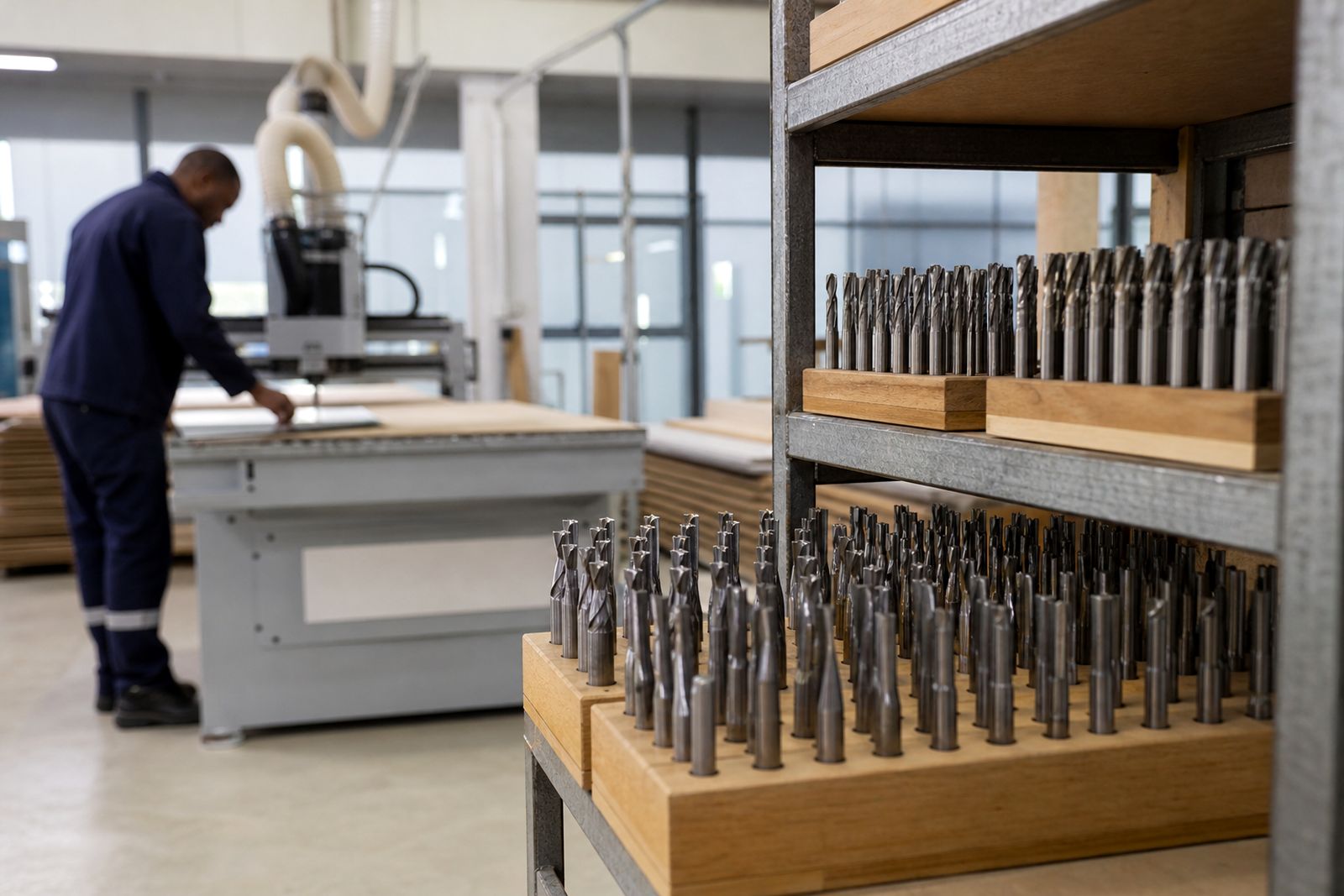
Addressing key edge prep for South African substrates
Workshop leads dealing with high-density chipboard, MDF, and local hardwoods often find that edge finish and tool life both depend on matching spiral geometry and cutting direction to the job. Upcut spirals give fast chip clearance but may cause breakout at the top edge on veneered board. Downcut and compression spirals help keep both surfaces clean, especially for melamine, but require good chip extraction to prevent re-cutting and burning.
We recommend starting with a compression spiral for boards with decorative faces and an upcut for solid timber, adjusting spindle speed and feed to balance chip load and finish. Written guidance on scrap board helps dial in the right settings. Aim for chip loads in the range of 0.08 to 0.2 mm per tooth, then adjust stepover and stepdown to suit the job and hold-down strength.
Collet care and runout checks for accurate results
Regular checking of collets and holders makes a visible difference on edge quality and tool life. Even small amounts of runout, often caused by dust or worn collets, can lead to chatter marks or premature cutter wear. Clean all mating surfaces with a soft brush and check for signs of scoring or dullness every time you change bits.
Use a dial indicator to check runout at the cutter shank, aiming for less than 0.03 mm in most CNC routers. Tighten the ER collet nut to the recommended torque, and never over-tighten or use pliers. Replace collets after 400 to 600 hours, or sooner if you see scoring or hear vibration.
Humidity and seasonal conditions in the local workshop
From Highveld winter dust to Durban’s coastal damp, local climate can affect both timber movement and tool performance. Humidity swings and temperature shifts can change how easily certain materials cut, especially MDF and softwoods, and can also affect spoilboard flatness and vacuum hold-down.
We advise checking spoilboard flatness monthly and surfacing when necessary. For aluminium and acrylic, watch for condensation on cold mornings and use compressed air or mist cooling to prevent melting or chip welding. Always store carbide tooling in a dry place, away from direct sunlight, to avoid corrosion or premature dulling.
- Check spoilboard flatness in changing weather
- Keep carbide tools dry and out of the sun
- Clean ER collets frequently to avoid rust
Also worth a look

Tell us about the job you need to cut
Send a note through our contact form with your machine, spindle and collet size, the material and thickness, the finish you need and your area, and we will come back with practical cutter options and a quote.
Open the contact form